The Rug Rule – How to Choose the Perfect Rug for Every Room
NOTES BY
Gregory Duke-Ambridge
TOPIC
The rug is the quiet architect of a room – it defines boundaries, softens proportions and brings disparate pieces of furniture into a harmonious whole. Choose well, and a space feels larger, warmer and more considered. Choose poorly, and even the most beautiful interiors can feel oddly disconnected.
The secret lies not simply in colour or pattern, but in understanding how a rug relates to the architecture of the room, the arrangement of the furniture and the way the space is used every day. Before you fall in love with a weave or a print, consider the foundation.
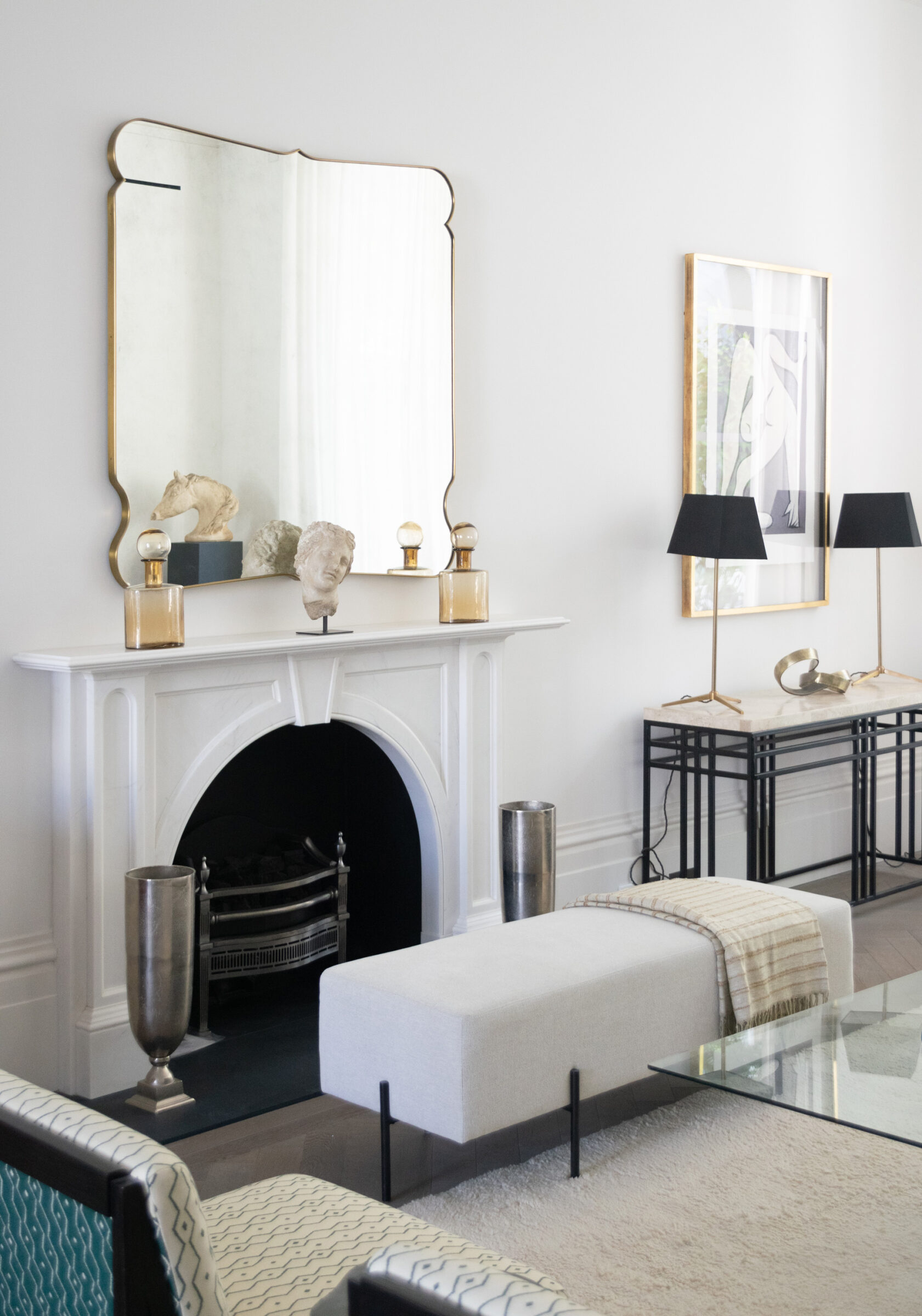
Size (definitely) matters
If there is one golden rule of rug selection, it is this: buy larger than you think.
Undersized rugs are one of the most common design mistakes. They visually shrink a room, isolate furniture and create the impression that everything is floating independently rather than belonging together. If you’re deciding between two sizes, almost always choose the larger one. Few people ever regret buying a rug that’s slightly too generous. Many regret buying one that’s too small. A rug should connect furniture, not merely sit beneath a coffee table. In most rooms, a larger rug creates an immediate sense of generosity. It allows the eye to travel uninterrupted across the floor, making the room feel broader, calmer and more luxurious. In living rooms, the rug should anchor the entire seating arrangement, giving every piece of furniture a visual relationship with the others.
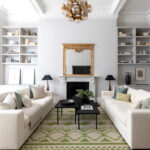
Ideally, all furniture should sit comfortably on the rug, including sofas, armchairs and the coffee table. If that’s not possible, ensure at least the front legs of every seat rest upon it. This creates cohesion while keeping the room feeling open and balanced.
What should be avoided is the common mistake of placing a small rug beneath only the coffee table. It rarely feels intentional and almost always makes the room appear smaller.
Let the room lead the way
Every room asks something different of its rug.
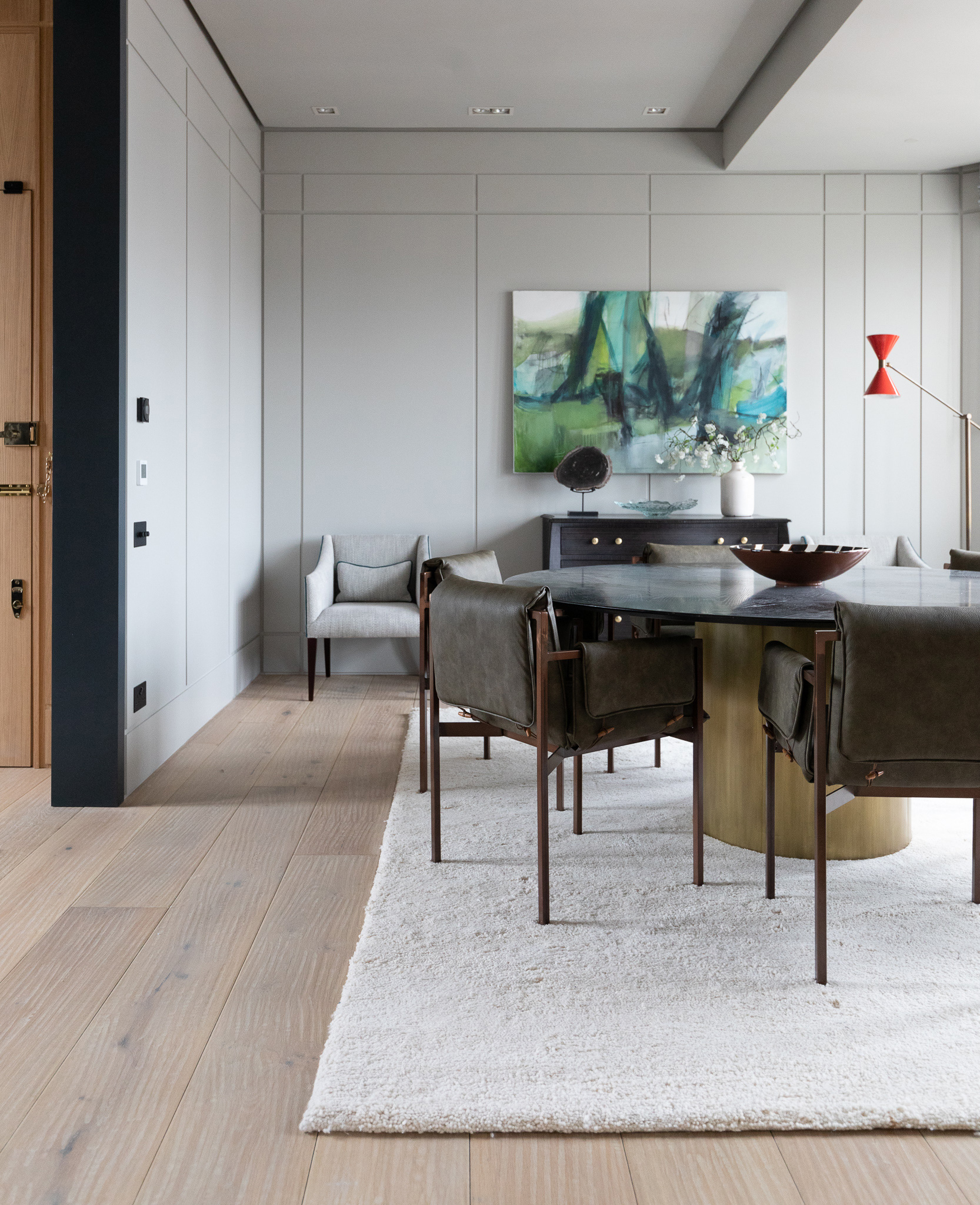
In the dining room, the rug should be large enough that every dining chair remains fully on it, even when pulled out. Nothing undermines a beautifully laid table quite like chair legs catching awkwardly on the edge of a rug every time someone sits down. Allow at least 60–75cm beyond all sides of the table. Flatweaves or low-pile rugs are generally the most practical choice, allowing chairs to move easily while standing up to everyday use.
In the bedroom, the rug’s role is as much about comfort as composition. Position it beneath the lower two-thirds of the bed so that it extends generously beyond both sides and the foot. The bed immediately feels grounded, while the room gains an added sense of luxury. In smaller bedrooms, matching runners on either side of the bed can achieve a similar effect.
Hallways benefit from runners that echo the shape of the corridor while leaving a visible border of flooring around the edges. They naturally draw the eye through the home and make even the simplest entrance feel more welcoming.
In open-plan homes, rugs become invisible walls. One beneath the seating area instantly defines the living room, while another beneath the dining table establishes a separate dining zone. Even without physical partitions, the eye instinctively understands where one space ends and another begins.
Shape, pattern and colour
Rectangular rugs remain the most versatile and suit the majority of living spaces. Square rugs work beautifully beneath square dining tables, while round rugs soften rooms filled with straight lines and are particularly effective beneath circular tables, in entrance halls or within reading corners.
Pattern has remarkable power to alter how a room feels. Large-scale designs bring energy and confidence to generous spaces, while finer, more intricate motifs introduce texture without overwhelming smaller rooms. If your furniture is understated, the rug can become the room’s statement piece. If your upholstery already carries bold patterns, a quieter rug allows the eye somewhere to rest. Think of the rug as either the lead vocalist or the backing choir. Very rarely should everything try to sing the solo.
Colour is equally influential. Light rugs reflect more natural light and can make compact rooms feel larger and airier. Darker tones create warmth, intimacy and definition, particularly in expansive spaces. One of the easiest ways to create a harmonious scheme is to choose a rug that quietly picks up two or three colours already present elsewhere in the room, whether in artwork, cushions or curtains.
Texture often has an even greater impact than colour. Chunky wool adds warmth and softness, flatweaves suit busy family homes, while natural fibres such as jute and sisal introduce relaxed character to informal interiors. Layering one rug over another can also add depth and richness without relying on bold colour.
Practical principles for every room
Whatever the room, keep these fundamentals in mind:
• Measure the room before shopping — never estimate.
• Leave a border of visible flooring around the rug’s perimeter unless deliberately covering almost the entire floor.
• Choose the rug size to suit the furniture layout, not simply the room dimensions.
• Match pile height to function — low pile for dining rooms and busy family spaces, softer textures for bedrooms and quieter reception rooms.
• When in doubt, size up.
• Above all, remember that rugs don’t simply decorate a room — they organise it. They create calm where there might otherwise be visual chaos. They soften acoustics, introduce warmth underfoot and quietly tell every piece of furniture where it belongs.
The finest interiors rarely rely on expensive furniture alone. More often, they succeed because every element feels connected.
A well-chosen rug does exactly that. It anchors the room, enlarges the space, and brings a sense of quiet confidence that is almost impossible to achieve without it.
That, in design terms, is where the room truly comes together.
Layouts built around the architecture
Furniture placement is never generic — it’s a response to the room it’s in. We design layouts specifically to maximise visual space and highlight a property’s best features, whether that’s a fireplace, a bay window, a high ceiling, or a particularly good sightline from the entrance. The layout comes from the architecture, not the other way around.
Elements of surprise
A scheme that plays it entirely safe is forgettable. We aim to make our schemes dynamic and introduce elements of surprise – an unexpected piece, an ambitious pairing, a moment that makes someone stop and look twice. This is deliberately at odds with the contrived “show-flat” look so common in house staging these dats, which we treat as the thing to avoid, not the standard to meet.
Broad Appeal, Not Narrow Taste
Every scheme is filtered through one more question: will this appeal to a wide range of people, not just to us? We ensure every design scheme appeals to the widest possible range of potential buyers, which means originality has to sit alongside restraint — surprising, but never alienating.
Soul and Personality
Underneath all of the above is a single aim: to give the property soul and personality. An empty, freshly refurbished flat has none of its own yet. Furniture, art, and layout are how we write that personality in, quickly and convincingly, so a prospective buyer can picture an actual life happening there.
Commercial sense, built in
None of this happens in a vacuum — every scheme also has to be a commercially sound option that works within a viable budget for the project. This is where furniture rental earns its place in the process: hiring is markedly more cost-effective than purchasing, allows for a fast turnaround with installation typically completed within days, and gives us the flexibility to adjust a scheme at the last minute or move furniture between properties within the same development as needed. Beauty that ignores the commercial reality of a project isn’t good staging — it’s just decorating.
Why the Order Matters
Atmosphere first, then palette, then texture, then art, then furniture, then layout, then the unexpected touch, then broad appeal, then soul — and commercial sense running underneath every one of those decisions. Skip a step and a room can still look pretty in a photograph and fail to do its actual job: making a buyer feel, within seconds of walking in, that this could be theirs.
That’s the anatomy. The rest is craft.