The Focal Point Factor – How to Arrange Your Living Room Like a Pro
NOTES BY
Gregory Duke-Ambridge
TOPIC
Every living room needs a star of the show. Without one, even the loveliest sofa can look as though it’s waiting for direction. In design terms, that star is your focal point – the visual anchor that gives the room purpose and guides where everything else should sit.
A fireplace, a television, a glorious sash window, a painting you fell in love with in Provence — each can take centre stage. The trick is knowing how to choreograph the supporting cast (sofas, armchairs, coffee tables and lamps) so the room feels balanced, inviting and instinctively right.
But what happens when you have more than one focal point? Or none? Here’s how to master the art of furniture configuration, whatever architectural hand you’ve been dealt.
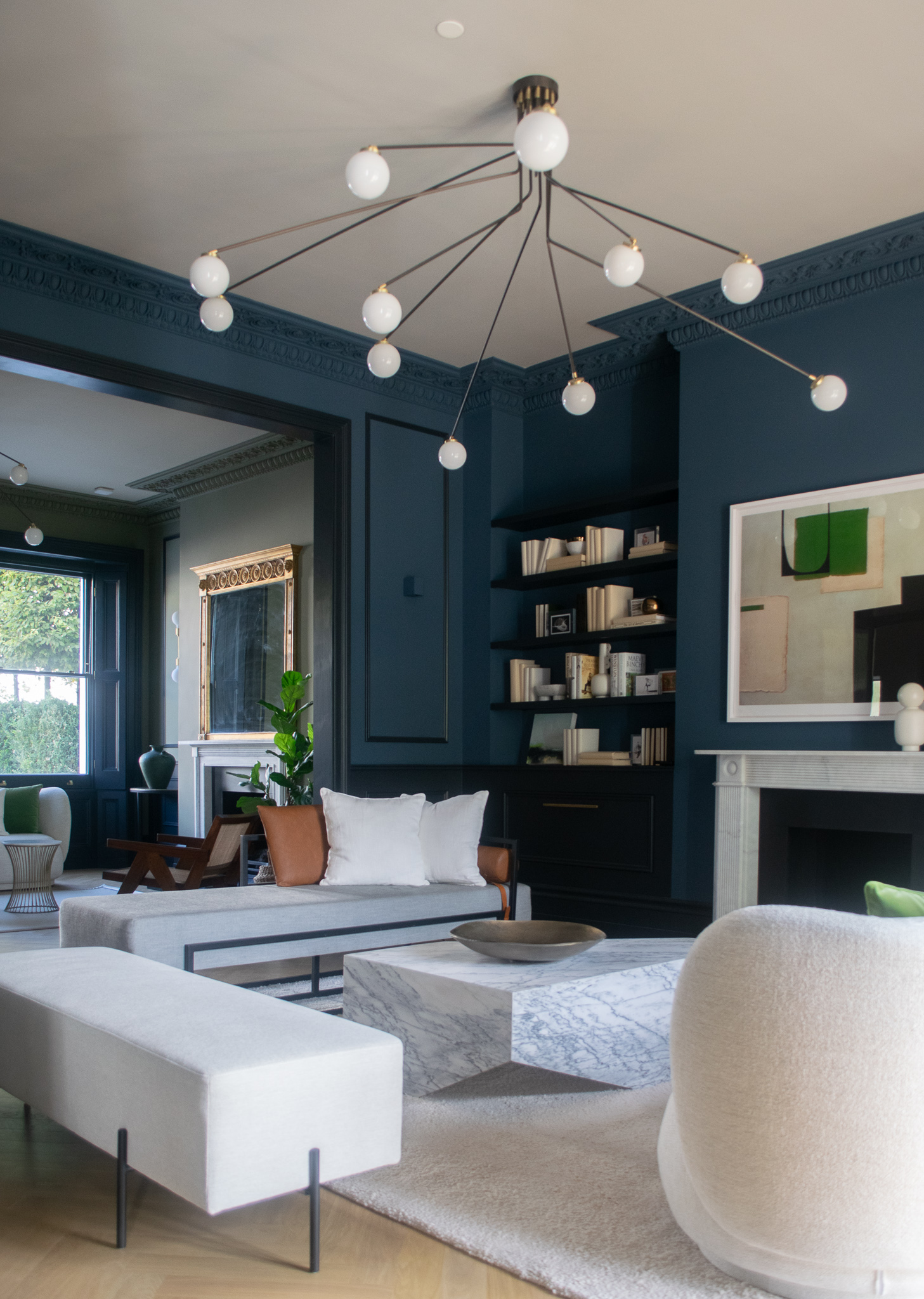
One focal point: keep it simple, keep it strong
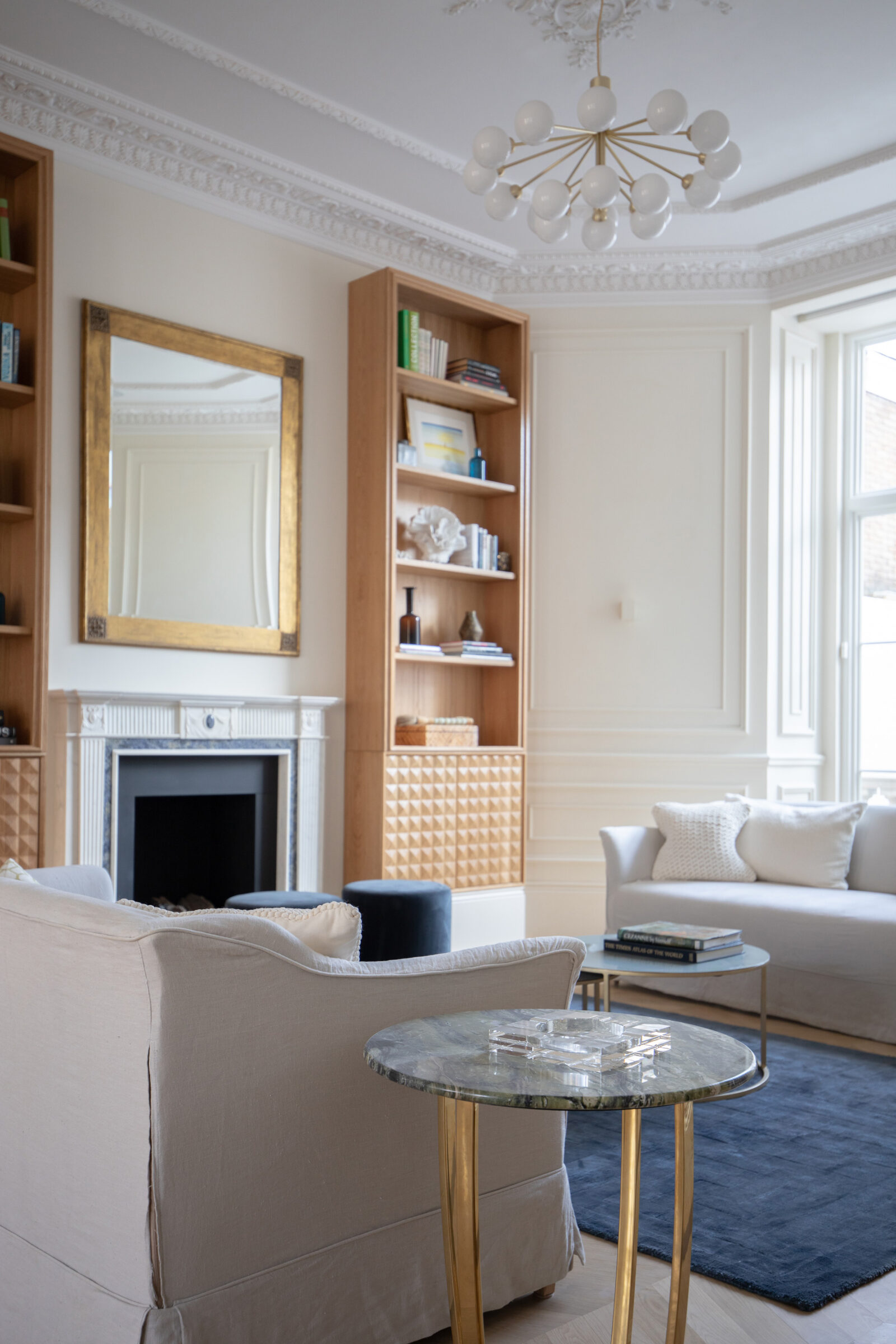
If you’re lucky enough to have a single, clear focal point — say, a fireplace or a large window with a view — your job is straightforward: honour it.
The Golden Rule
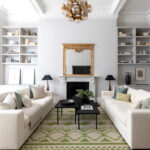
Arrange the main seating to face the focal point directly. This doesn’t mean pushing everything against the walls (a common misstep); instead, float your furniture inward to create a conversational grouping.
Layout Tips
• Position the sofa opposite or perpendicular to the fireplace or TV.
• Flank the sofa with armchairs angled slightly inward to encourage conversation.
• Centre your coffee table in relation to the seating, not the walls.
• Anchor the arrangement with a generously sized rug — all front legs of seating should sit on it, if not the whole piece.
If the focal point is a television above a fireplace, keep visual clutter to a minimum. Built-in cabinetry or symmetrical shelving can help integrate the screen so it doesn’t dominate the aesthetic.
Designer’s note
Resist the urge to compete with the focal point. If the fireplace has a dramatic marble surround, let it sing. Keep nearby furniture shapes clean and harmonious.
Two focal points on adjacent walls: create a gentle pivot
A fireplace on one wall and a television on the wall beside it? Or perhaps French doors meeting a media unit at right angles? Adjacent focal points require a more nuanced approach.
The Strategy
Create a layout that acknowledges both without forcing the furniture to choose sides.
Layout Solutions
• If possible, float the sofa so it faces somewhere between the two focal points.
• If not, then face the sofa to the main focal point and the second smaller sofa or pair of armchairs to the second focal point, creating an L-shape configuration. In this scenario, think of your seating as forming a soft L-shape or U-shape that mediates between the two walls.
• Use swivel armchairs allowing guests to turn towards either feature.
• Mount the television on an adjustable bracket so it can angle toward the seating area when needed.
• Position a central coffee table that visually anchors the arrangement regardless of viewing direction.
The aim is balance, not rivalry. Each focal point should feel intentional rather than accidental.
Two focal points on opposite walls: A study in balance
A fireplace at one end of the room and a television or dramatic window directly opposite can feel like a design duel. Each vies for attention; neither naturally recedes. The answer lies in clarity — and a willingness to decide how the room truly lives.
The Strategy: Two zones, two purposes
If space allows, lean into the duality and divide the room into two considered areas, each with its own focus.
Zone One: The fireside retreat
Arrange a sofa facing the fireplace, complemented by a pair of armchairs angled inwards. A rug beneath and a coffee table at the centre will define this as a warm, conversation-led setting — ideal for evenings and entertaining.
Zone Two: The viewing nook
At the opposite end, create a relaxed TV zone with a smaller sofa or chaise facing the screen. Add a side table and a soft table lamp to give it intimacy and purpose.Use a console behind the main sofa or a low, open shelving unit as a subtle room divider. The key is visual cohesion — consistent colours and materials will ensure the room feels layered rather than sliced in two.
If the room is too small to zone
In a more compact space, dividing the room may simply create clutter. Here, you’ll need a more decisive approach.
Option One: Declare a primary focal point (fireplace leads)
Choose the fireplace as the hero. Arrange seating to face it directly and integrate the television as quietly as possible — mounted above the mantel (if proportions permit), concealed within cabinetry, or positioned to one side. The goal is hierarchy: one focal point commands, the other complements.
Option Two: Float and pivot
Position the sofa centrally, floating it slightly away from both walls, and incorporate swivel chairs or a lightweight accent chair that can turn towards either feature. A round coffee table softens the visual tension and allows for flexibility without overcrowding the footprint.
Option Three: Let the television take centre stage
If daily life revolves around film nights and box sets, it’s perfectly legitimate for the television to win. In this case, orient your main seating towards the screen and treat the fireplace almost as architectural backdrop — another beautiful wall rather than the room’s anchor. Allow a little breathing space in front of the hearth so it doesn’t feel obstructed. A single armchair placed nearby, angled gently towards the fire, can give it purpose without forcing the entire layout to respond to it. You might style the mantel thoughtfully with artwork or a mirror so it retains presence, even if it’s not the primary focus.
In smaller rooms especially, clarity is calming. Choose what matters most, arrange with confidence, and let the secondary feature play its role with quiet elegance. Opposing focal points need not compete. With thoughtful planning and a touch of editorial discipline, they can coexist — bringing both atmosphere and practicality to your living room.
No natural focal point? Create one
Some rooms — particularly new builds or open-plan spaces — can feel oddly directionless. Blank walls. No chimney breast. No architectural drama. Fear not. You can absolutely create your own focal point. Consider these design anchors.
A statement art
A large-scale artwork instantly commands attention. Hang it at eye level and centre your seating arrangement around it.
A built-in bookcase
Floor-to-ceiling shelving, styled with books, ceramics and collected treasures, brings both gravitas and personality. Paint it in a rich tone for added depth.
A feature wall
Panelling, limewash paint, textured wallpaper or even a bold colour can give a wall presence.
A sculptural piece of furniture
An antique armoire, a grand mirror, or a beautifully designed media unit can take centre stage.
Lighting as theatre
A dramatic pendant or chandelier in the centre of the room can act as an unexpected focal point — especially effective in period properties. Once established, orient your furniture toward this new visual anchor as you would a fireplace.
Practical principles for every living room
Whatever your configuration, keep these fundamentals in mind:
Conversation is king
Seats should be no more than 2.5 metres apart to feel intimate.
Avoid perimeter syndrome
Pull furniture away from walls whenever space permits.
Mind the pathways
Ensure natural walking routes aren’t obstructed.
Scale matters
Oversized sofas in petite rooms overwhelm; tiny rugs maroon furniture.
Above all, remember that a living room must live well. It should accommodate film nights, impromptu drinks, Sunday papers and the occasional sprawl. A well-considered focal point brings order and elegance. It gives the eye somewhere to rest and the furniture somewhere to belong. And when everything is in its rightful place, the entire room exhales.
That, in design terms, is when the magic happens.